
ASCO 2026: What Just Changed and What It Means for Pharma Marketers
What you’ll learn:
The oncology frontier has shifted from metastatic disease to curative-intent settings, and the first brand to enter the adjuvant window typically becomes the default, making earlier positioning a strategic imperative rather than a future consideration.
De-escalation, liquid diagnostics, and platform convergence are increasingly fragmenting treatment decisions into biomarker-defined, patient-specific choices, which means efficacy alone no longer differentiates a brand.
Patient-reported outcomes, AI, and GLP-1 data are reshaping the context around the molecule, and the brands that own that space will have a durable advantage over those focused only on the clinical story.

Image Source: ASCO
More than 44,000 oncology professionals gathered in Chicago for this year’s ASCO Annual Meeting under the theme “The Science and Practice of Translation,” which is a fitting framework for a meeting defined less by single breakthroughs than by how fast the field is turning new science into new standards.
Across the entire program, one pattern held: efficacy is the cost of entry, and the marketing challenge in oncology is clearer than ever. Everything that surrounds the molecule, from access to treatment and patient experience to the diagnostics that drive choice, must work alongside efficacy, safety, and tolerability. Pharma marketing will need to be more nimble at driving relevance for mechanism-driven, targeted therapies matched to specific patient biomarkers and preferences, and required clinician education, while broadening access and real-world evidence.
1. Practice-Changing Trials: Reading the Trends
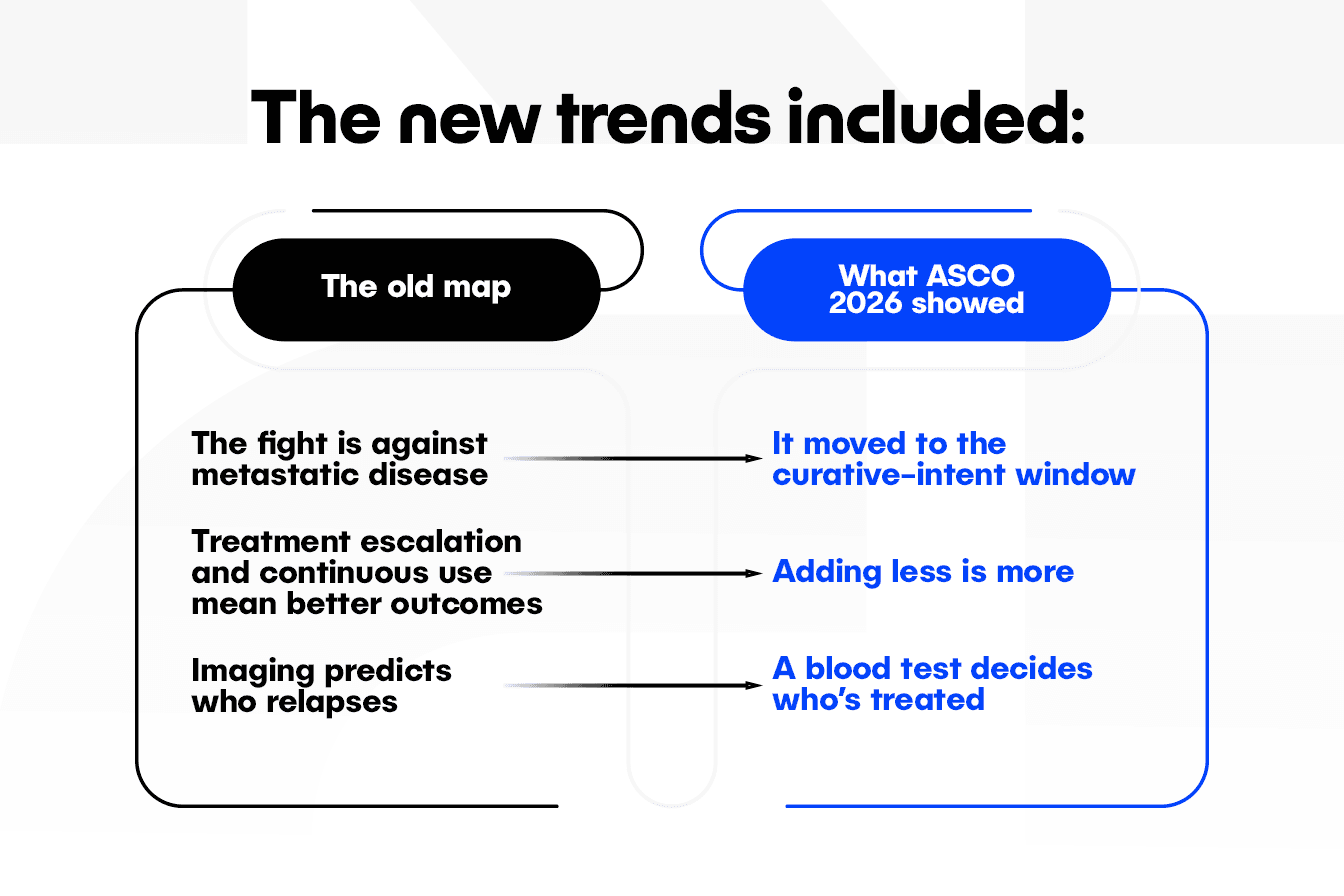
The individual results matter less than the clinical patterns they form. Three shifts emerged that cut across tumor types and changed where, when, and how a brand competes.
The frontier moved earlier
The most consequential data wasn’t in metastatic disease but in the curative intent. Finite precision before and after surgery is now the template across lung (LIBRETTO-432), bladder (KEYNOTE-B15), and prostate (PROTEUS). Metastatic-only positioning is a closing window. The center of gravity has moved earlier into the curative-intent setting, and the first agent to reach the adjuvant slot usually becomes the default.
If we could ever prevent a patient from getting to Stage IV, why not?
— Dr. Isabel Preeshagul, MSK (via Oncology News Central)
Doing less, on purpose
Some advances proved that patients could safely have fewer treatments. Carefully selected treatment holidays represent a reasonable clinical consideration. Two-thirds of patients with the most common early breast cancer were able to skip chemotherapy, with virtually identical recurrence-free survival, because of the genetic test OPTIMA. Also, interrupting hormone therapy in prostate cancer preserved quality of life without losing control (A-DREAM). De-escalation is now a clinical strategy in its own right and a ready-made payer argument for shorter, narrower treatment. Even lifestyle factors are included in the outcome data: one early study linked higher post-surgical activity to lower ctDNA positivity and a lower recurrence risk (SCRUM-MONSTAR LIFELOG).
Molecular and liquid diagnostics continue to expand
Every major cancer is fragmenting into biomarker-defined subtypes, and the test that defines them is increasingly a blood draw. As we’ve seen at PMWC 2026 earlier this year, ctDNA crossed from predicting recurrence to deciding who receives adjuvant treatment at all (IMvigor011), while plasma cfDNA panels won FDA companion-diagnostic approval for broad solid-tumor profiling (Guardant360 Liquid CDx, FoundationOne Liquid CDx). The companion diagnostic may not be an effective strategy for every brand to build alongside the drug. Instead, it’s the system infrastructure that decides which patients ever reach the prescribing conversation.
WHAT IT MEANS FOR MARKETERS
The ecosystem map is evolving in three directions at once. The fight against cancer is moving earlier, and success is increasingly defined by what you can safely take away rather than what you add.
2. Treatment Innovation: The Therapeutic Platforms Reshaping Oncology
Uncovering new MOA and therapeutic platforms is not new for ASCO, but 2026 marked a turning point in what these technologies can achieve. Targets once written off as undruggable began to fall, and several modalities—bispecifics, antibody-drug conjugates (ADCs), radioligands, cell therapies—are now converging on the same tumors simultaneously. Success is no longer defined as whether a platform works against the tumor, but which one really helps the patient.
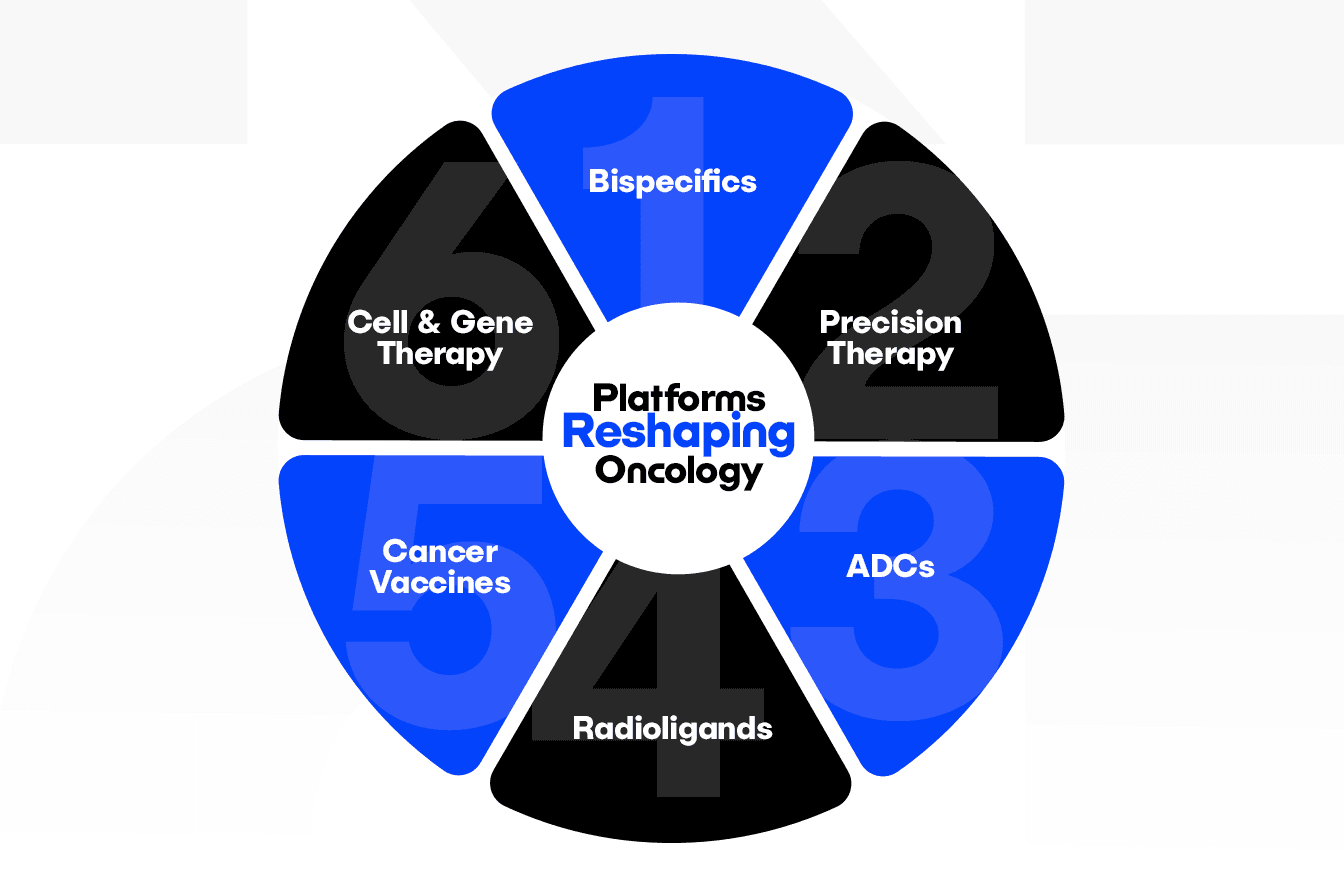
Each platform is pushing in the same direction, earlier lines, new tumors, or targets once off-limits. Bispecific and multi-specific antibodies reached the front line (HARMONi-6); precision agents cracked long-undruggable tumor biology and carried mechanisms across tumor types (RASolute 302, SARC041, CROWN 7-year update); and ADCs moved upstream into earlier-line and perioperative settings while redrawing who qualifies (DESTINY-Breast07, EV-302, DREAMM-9, KEYNOTE-B15, SHR-A2102).
The newer modalities follow the same path: radioligands moving earlier and beyond prostate cancer (PSMAddition, AcTION, CONVERGE-01, VMT-α-NET, Lu-DOTATATE in meningioma); mRNA vaccines posting first real signals in melanoma with early reads beyond (Intismeran autogene, INTerpath-013, Smithy); and cell therapy pushing into in-body manufacturing (inMMyCAR). With efficacy now the baseline, the contest has moved to safety, tolerability, and delivery.
[Bispecifics], and at times, trispecific antibodies… started out in a relapsed/refractory setting, but they have rapidly been moving toward earlier lines of therapy and front line.
— Dr. Lore Gruenbaum, Blood Cancer United (via Oncology News Central)
WHAT IT MEANS FOR MARKETERS
The next five years will be won on three levers: a credible safety and tolerability story, a patient preference for low treatment burden, and a deliberate strategy for the access gate.
Innovation with Purpose: Patients and the Cancer Community at the Heart of ASCO 2025
Read Now3. Beyond Innovative Molecules
Three themes cut across the emerging data, which are less about a specific tumor type and more about how oncology brands will be built, accessed, and grown.
AI is no longer a future topic
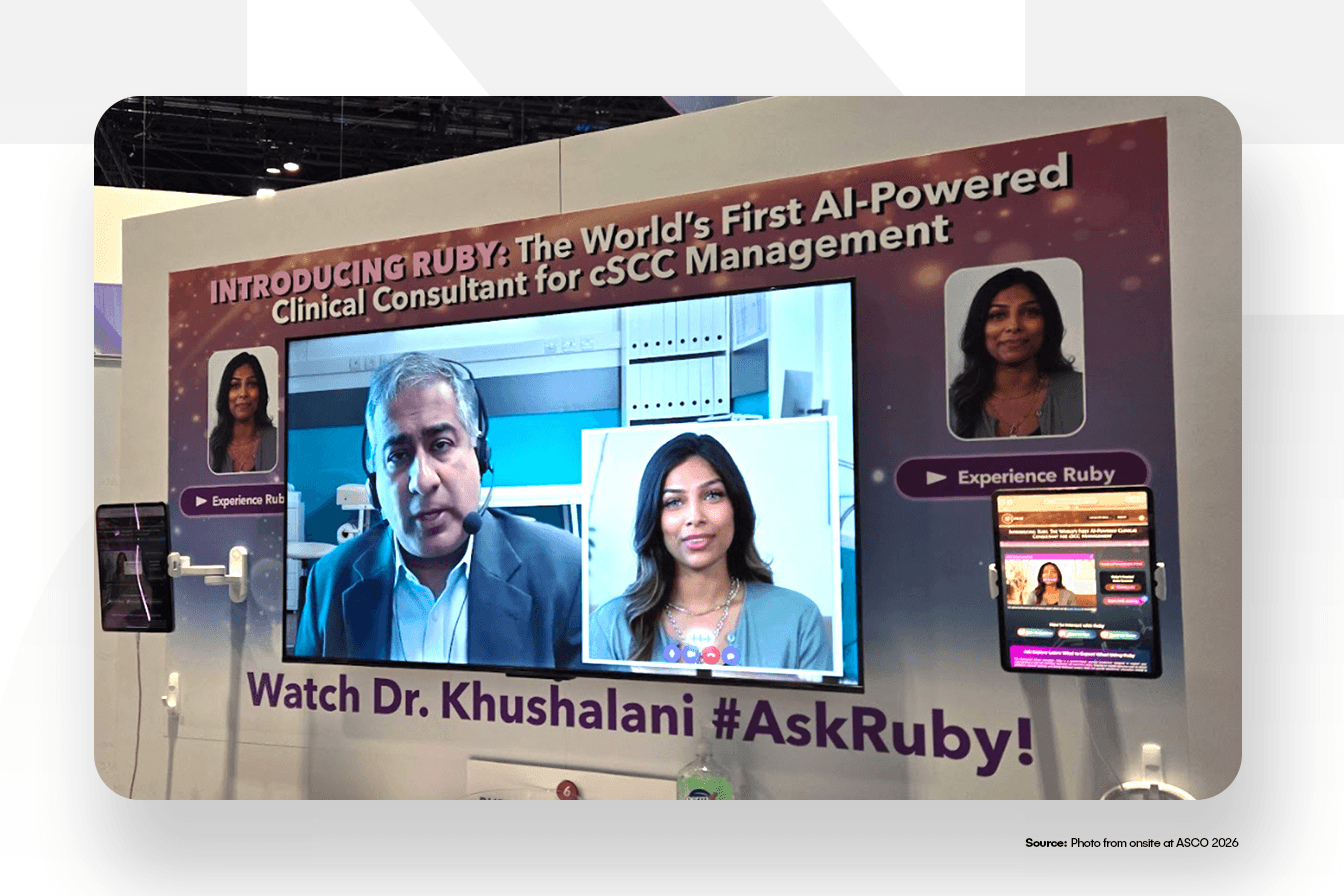
Similar to what was previewed at PMWC back in March, AI is fundamentally transforming predictive oncology and pathology by turning massive, complex datasets into actionable insights that forecast disease progression, treatment response, and tumor evolution. Patients now consult AI about their diagnosis and options before they ever see an oncologist, and what they find is shaky: an ASCO 2026 analysis (Subramanian et al.) found only one-third of patient-facing webpages on AI in cancer care were high quality, and just 15% flagged the risk of AI “hallucinations.”
If your drug is inaccurately or not at all described by the tools patients consult, that’s a medical-affairs liability no one owns yet. AI is also moving into the clinic itself. It is surfacing patients who have missed biomarker testing and qualify for precision therapies, speeding trial matching and, through EHR-integrated decision support, increasingly shaping which patients get which treatments. It’s becoming infrastructure and not a research tool.
Publicly available, patient-facing information about AI in cancer care is limited, difficult to read, and often low quality.
— Pearl Subramanian et al. (Via ASCO 2026 Abstract 9000)
GLP-1s are showing up in oncology
The metabolic blockbuster class of the decade showed up at ASCO with its own session and a wave of abstracts on cancer risk and outcomes—including a RWE analysis linking GLP-1 use to a 33% lower risk of death (45% in breast cancer) across 10,225 patients (Orland et al.). The implications are multidirectional: a label-expansion signal for metabolic brands, a confounder for oncology trials whose enrollees are increasingly on a GLP-1, and a long-term cost argument for payers—the most commercially under-explored story of the meeting.
After this presentation comes out, I’m sure patients will ask if it’s going to help their prognosis, which has not been the question previously. The question has been, “Are these drugs harmful to me?”
— Dr. Joanne Mortimer, City of Hope (via Managed Healthcare Executive)
The patient experience became the product
Patient-reported outcomes moved from secondary to co-primary endpoints, and subcutaneous formulations turned 30-to-90-minute infusions into a few minutes in a chair. With efficacy assumed, treatment experience is becoming the differentiator—the message writes itself: we work as well and we give your time back.
WHAT IT MEANS FOR MARKETERS
Own the space around the molecule. Audit how AI describes your brand and develop AI-agent education strategies to appropriately influence the patient-AI-doctor conversation, model GLP-1 use across your patient population, and treat patient experience as a driver, not a barrier, and a powerful claim in its own right.
Conclusion
ASCO 2026 unmistakably refined a new direction: the molecule is no longer the whole story. The brands that win in the near future will build both strategy and execution around the full equation—earlier settings, safety and patient experience, AI-agent content, and the diagnostic gate that controls access—while the science is still fresh. As AI increasingly mediates how brands are discovered and described, the message has to be built to win with LLMs, too. You can check out our perspective on surviving this shift in Generative Everything Optimization. The window between a new standard and the messaging that catches up to it is short, and it is already closing.
Sources
Managed Healthcare Executive, Joanne Mortimer on GLP-1 use and cancer outcomes, https://www.managedhealthcareexecutive.com/view/joanne-mortimer-m-d-on-associations-between-glp-1-use-and-cancer-outcomes-asco-2026
CURE, Top 5 Takeaways from ASCO 2026 That Patients Should Know”, https://www.curetoday.com/view/top-5-takeaways-from-asco-2026-that-patients-should-know
Oncology News Central, “Experts Preview Practice-Shifting Studies”, https://www.oncologynewscentral.com/oncology/asco-2026-experts-preview-practice-shifting-studies
Klick Health is the world’s largest independent commercialization partner for life sciences and a leading full-service pharma marketing partner, serving as agency of record for leading pharma, biotech, and healthcare brands. Klick’s specialized offerings are rooted in deep medical and scientific understanding, including market insights, award-winning creative, and proprietary AI and data models to craft impactful brand narratives and seamless customer journeys. Backed by nearly 250 medical experts and advanced healthcare analytics, Klick delivers integrated marketing strategy and communications, from new product launch strategy to MLR review with real-world evidence, helping brands thrive in today’s complex healthcare landscape. Learn more at Klick.com.
著者

Dane Lund, PhD
Medical Strategist

Andras Varadi
Medical Strategist

Camille Schrier, PharmD
Associate Medical Strategist
関連コンテンツ



Ready to Drive Life Sciences Forward?
Experience the transformative power of Klick Health, where deep industry expertise meets cutting-edge AI-driven wisdom.
As your trusted partners in life sciences commercialization, we combine a storied history in healthcare with the latest technologies to elevate every facet of your omnichannel strategy. From crafting engaging narratives to enabling data-driven decision-making, our integrated capabilities ensure you lead the way in transforming patient outcomes through digital health innovation.
Let’s create something transformative together.